
Pocket pistols are all the rage today and, as I have written previously, this can give the impression that they are a new phenomenon. But, of course, they are not. To the contrary, they are much older than I ever knew.
I learned this recently while visiting the DeWitt Wallace Decorative Arts Museum at Colonial Williamsburg between the two presentations I made at the College of William and Mary last week. Much like my discovery of a collection of miniature firearms at the Montreal Museum of Fine Arts, within the DeWitt Wallace’s collection of fine furniture, paintings, and textiles you can find “Lock, Stock & Barrel,” an exhibit of firearms from the Colonial Williamsburg collection.
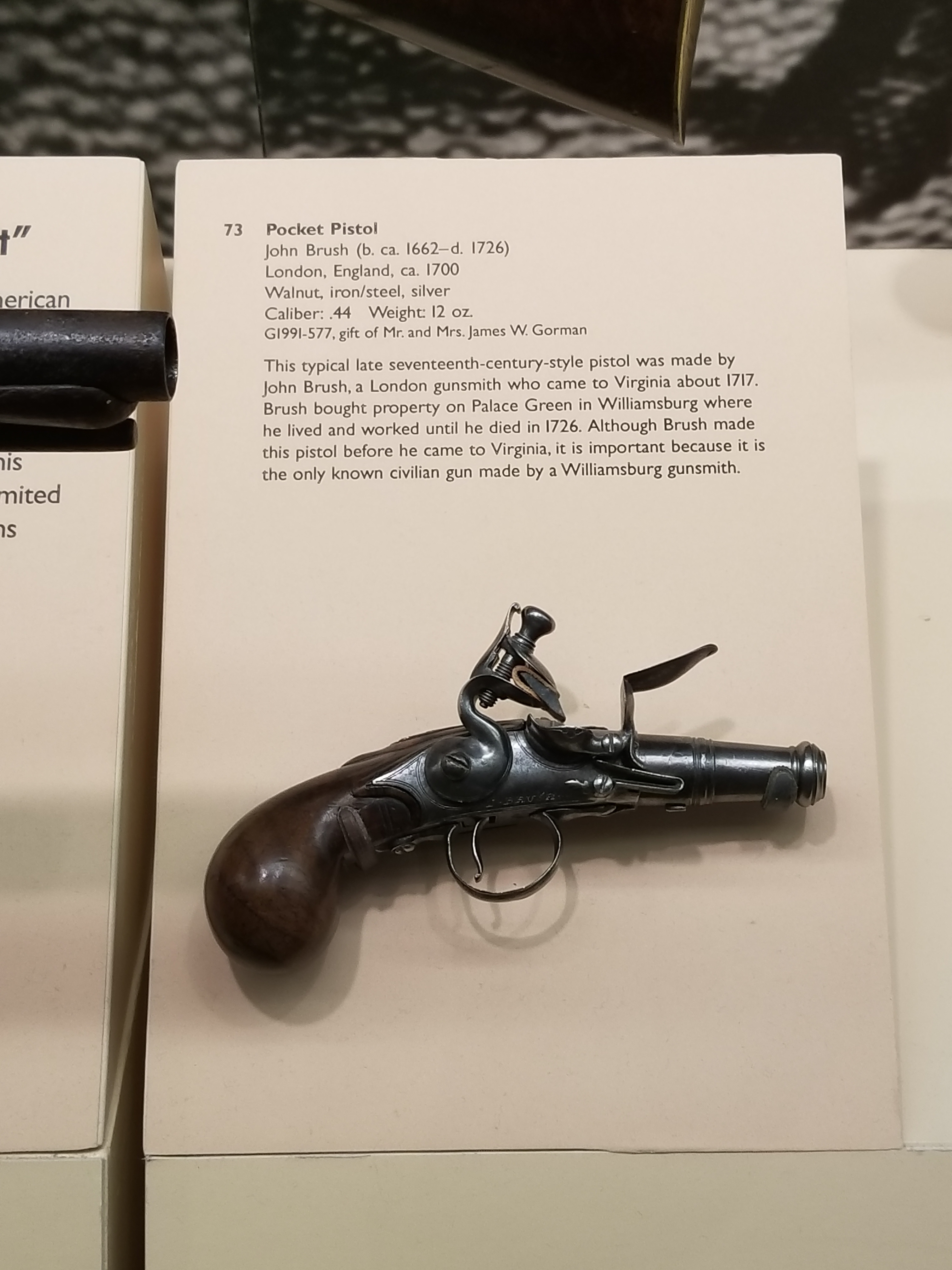
And scattered among the many long arms in the exhibit are a few rare gems like the John Brush flint lock pistol from ca. 1700 pictured below. Note the caption: “Although Brush made the pistol before he came to Virginia, it is important because it is the only known civilian gun made by a Williamsburg gunsmith.”
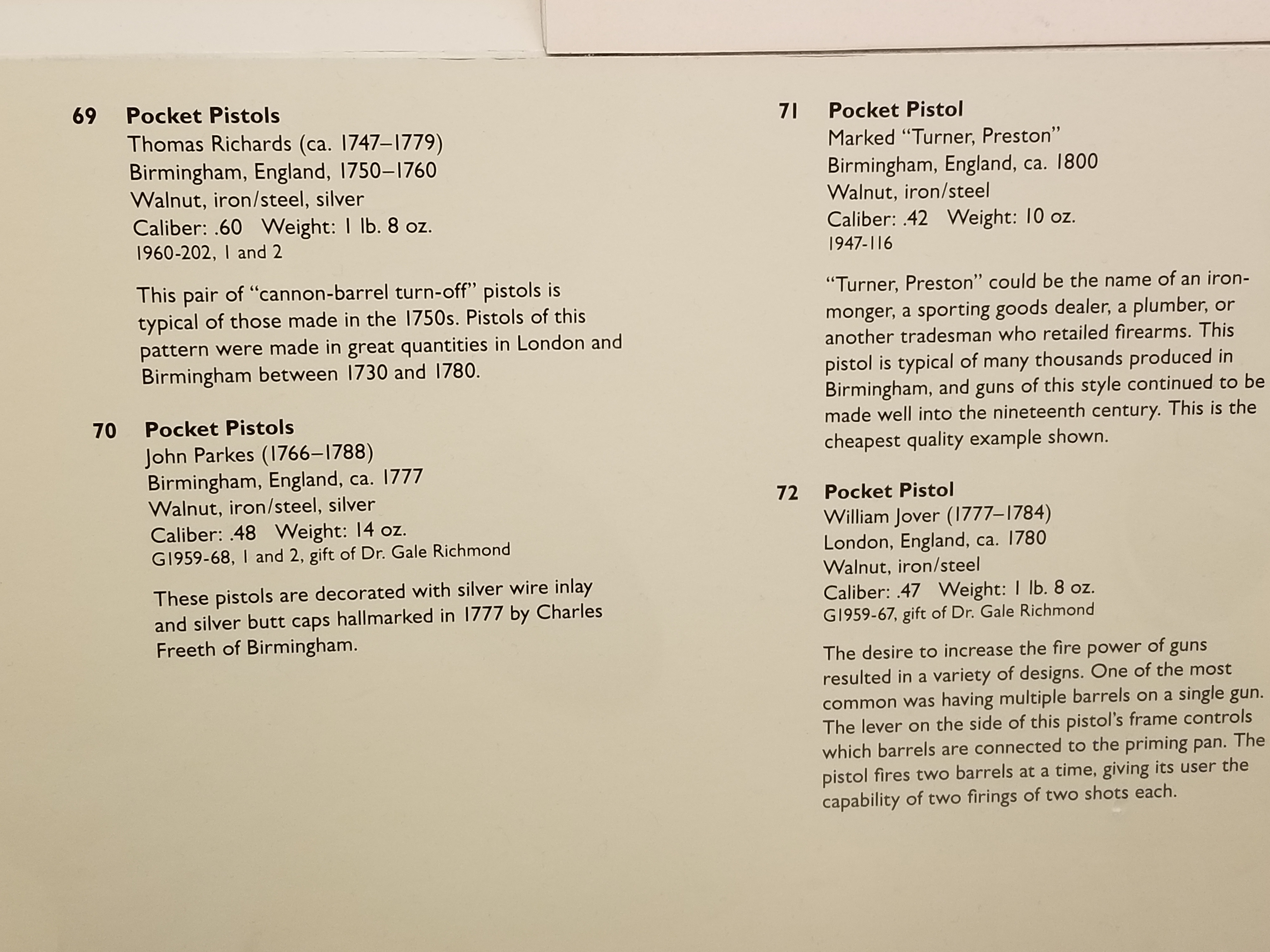
This was not the only pocket pistol on display. A little bit of history goes a long way.


 Gun Culture 2.0
Reblogged this on and commented:
Pocket pistols. A person needs deep pockets. Holds pistol, and money.
LikeLiked by 1 person
Cannon barrel turn-off pistols were unique among pistols of the flintlock era since by clearing the priming and unscrewing the barrel a possibly damp powder charge could be readily replaced without firing the gun. This was an obvious advantage for city residents.
LikeLiked by 1 person
Who knew?!?!
LikeLiked by 1 person
Reblogged this on Windage and Elucidation and commented:
“Guns everywhere” is not an NRA invention.
LikeLike
But remember kids, the eeeeevil NRA is the one pushing the novel concept of “guns everywhere.”
LikeLike
I need a bump stock for my Brown Bess.
LikeLiked by 1 person
[…] firearms, I have learned a lot about the history of “pocket pistols” while visiting the DeWitt Wallace Decorative Arts Museum at Colonial Williamsburg and the Texas Rangers Museum in […]
LikeLike