
In light of several self-defense shootings in Tulsa, Oklahoma, I am going to review some points I’ve already made in a few posts, but obviously bear repeating.
Despite the concern about a rising number of civilian justifiable homicides, and criticisms of “Stand Your Ground” laws as allowing people to “shoot first and ask questions later,” it is absolutely not the case that a claim of self-defense or of standing one’s ground automatically grants one immunity from prosecution or a free pass from juries.

Although George Zimmerman successfully argued his case for self-defense before a jury, his fellow Floridian Marissa Alexander is famous precisely for a jury’s rejection of her claim of self-defense and her invoking of SYG law. Michael Dunn has also recently been convicted of first-degree murder and sentenced to life in prison without the chance of parole for emptying his gun into an SUV at a Jacksonville, Florida gas station, killing Jordan Davis.
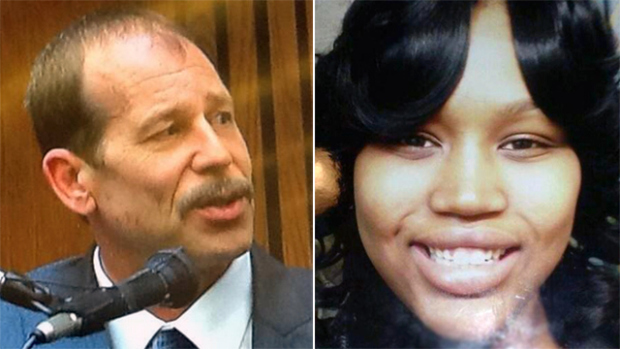
Of course, not every significant case takes place in the Gunshine state. I have previously written about the case of Byron David Smith in Minnesota (here and here). He is serving a life sentence with possibility of parole for murdering Haile Kifer and Nick Brady. And the case of Theodore Wafer, who shot and killed Renisha McBride through his screen door on his porch in Detroit, drew considerable attention and even one comparison with Bernard Goetz (since withdrawn). But erroneous understandings of “Castle Doctrine” did not prevail in the Wafer case, and he too was convicted of second degree murder and manslaughter and sentenced to a minimum of 17 years in prison. Ditto Markus Kaarma in Missoula, Montana, found guilty of deliberate homicide in the killing of German high school exchange student Diren Dede and sentenced to 70 years with no possibility of parole for 20 years.

It is absolutely true that the number of states with liberalized laws concerning who can carry a concealed weapon in public has grown dramatically since Florida implemented “shall-issue” concealed carry in 1987. And the growing number of individuals who have taken advantage of their ability to get a concealed weapon permit led a number of states to clarify in their statutes the conditions under which one can use lethal force and has a duty to retreat (or not). But it is still not the case in the United States that you can “shoot first and ask questions later.” Or, if you do, that you can do so with impunity.
In fact, the conditions under which a private citizen can legally shoot another citizen are very narrow, whether on their own property or in public. This is perhaps one reason there are relatively few private citizen justifiable homicides annually – ranging from a low of 164 (in 2000) to a high of 495 (in 1980) – especially in relation to the size of the US population, the number of guns in circulation, the amount of violent crime, etc.

These small numbers notwithstanding, a mistake in this area can bring unimaginable grief and a loss that no amount of punishment can compensate for. The convictions of Kaarma and Wafer and Dunn will not bring Diren Dede and Renisha McBride and Jordan Davis back to their families.
Moreover, even though George Zimmerman was acquitted by a jury, most civilian gun trainers would not hold him up as a model of armed citizenship. In fact, if anything, he is a model of what not to do.
 Gun Culture 2.0
[…] As I have noted previously (and often), CLAIMING self-defense or invoking Stand Your Ground laws does not give you a “license to kill” or to “shoot first and ask questions later.” […]
LikeLike
SO WHY DO cops get away with it against unarmed children
LikeLike
Because the justice system in the United States is imperfect.
LikeLike
[…] story of Aaron is a cautionary tale. Gun carriers can add it to the long list of such examples of “what not to do,” from George Zimmerman to Michael Dunn to Marissa Alexander to Byron David Smith to Theodore Wafer […]
LikeLike
[…] “stand your ground” laws as written are not “shoot first and ask questions later” laws as some critics charge, how people in their everyday lives understand the law can differ greatly […]
LikeLike
[…] that concealed carry license holders are very law-abiding in comparison to the general public. The Michael Dunn’s of the concealed carry world are the exception, not the rule, and Dunn is spending the rest of his life in prison for the felonious killing of […]
LikeLike
[…] I have written previously, the homeowner was convicted of murder and sentenced to 70 years in prison. Castle Doctrine notwithstanding. It is no free […]
LikeLike
[…] perhaps due to superstition?). She then adds a 14th case, and then adds a Tweet about Jordan Davis (whose case I DID write about, over 2 years ago), and then adds a Tweet about #FloridaMan Jorge Jove who shot up an AT&T truck the other […]
LikeLike
I recommend Andrew Branca’s excellent book, “Law of Self Defense”, and his class of the same name, to anyone interested in how a self defense plea actually works in court.
LikeLike
Agreed. Mentioned frequently on this blog!
LikeLike
[…] when it comes to armed self-defense, the bad fruit borne by bad trees are dead human beings. Jordan Davis (murdered by Michael Dunn at a Jacksonville gas station), Haile Kifer and Nick Brady […]
LikeLike
[…] The video begins not with a story about a lawful defensive gun use but with the story of Theodore Wafer. Wafer is the notorious convicted felon who is serving time for shooting Renisha McBride through the screen door of his Dearborn Heights, Michigan home. (Also, are there no more current examples? I wrote about Wafer ***5 years ago*** on my other blog.) […]
LikeLike